
Modes
Rush Royale Game Modes Explained: PvP, Co-op and Rotating Events
Key takeaways
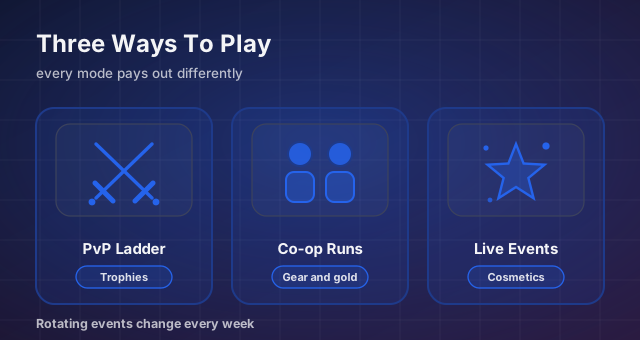
- Each queue pays a different currency — pick modes by the resource you are short of.
- Ranked and co-op are the two modes that reward consistency over raw play time.
- Rotating events are worth it only when their reward density beats your normal loop.
Rush Royale is built from a small set of repeatable modes, and each one pays a different currency for a different kind of investment. Knowing what a queue actually asks of you - deck level, coordination, or simply minutes - is the difference between steady progress and spending an hour a day in the wrong place.
Mode overview at a glance
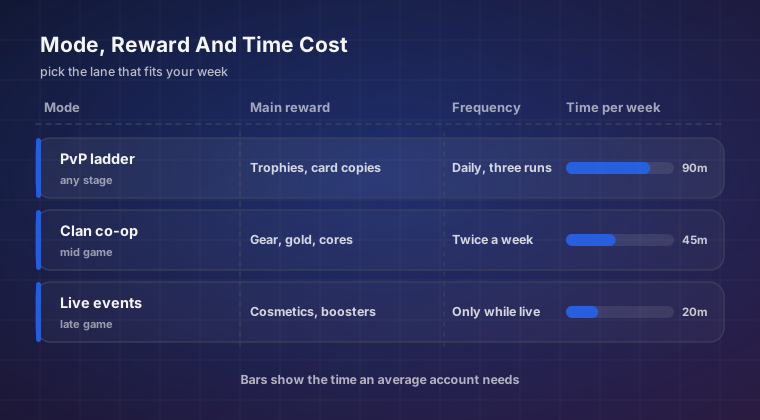
The fastest way to read the game is to separate the modes by what you physically do inside them. League matches are a solo ladder where you and an opponent race to survive the same wave set. Co-op puts two players on one shared board against waves. Clan wars wrap league-style PvP in a timed team schedule, and rotating events rewrite the ruleset for a limited window.
Each mode then pays out a different mix of gold, gems, chests, keys and season pass progress. Treating all of them as one blob of "matches to play" is the main reason players feel stuck: they invest ladder hours into a mode that pays in a currency their account does not currently need.
| Mode | What you actually do | Main rewards | Suggested weekly investment |
|---|---|---|---|
| PvP leagues | Solo ladder match; both sides face the same waves, whoever survives longer wins | Season rating, gold, chests, pass progress | Short daily sessions of a few matches |
| Co-op | Two players share one board and push a wave ladder together | Gold, chests, event currency | A handful of runs when a partner is available |
| Clan wars | Limited PvP attempts scored collectively against another clan | Clan rewards, gold, chests | All attempts inside the scheduled window |
| Daily challenges | Small repeatable tasks: play matches, use a unit type, open chests | Gold, keys, pass progress | Every day, before anything else |
| Rotating events | Modified rulesets: altered mana curves, restricted pools, special wave sets | Event currency, chests, sometimes gems | Only when the modifier suits your deck |
PvP leagues: the default queue
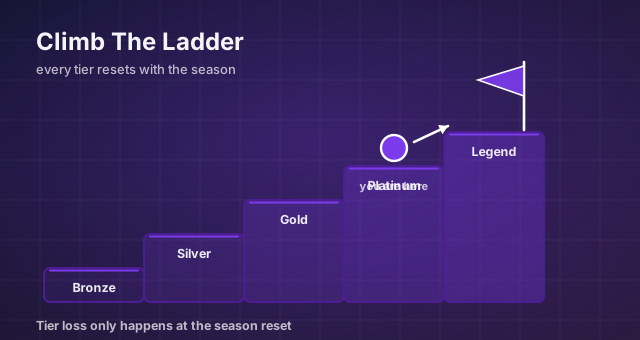
Leagues are the backbone of the game. You queue with your five-card deck, both players receive the same wave structure, and the one who holds out longer takes the win. Because your deck enters every match at full strength, leagues reward preparation far more than they reward reflexes.
Climbing is gated mostly by card levels and by how coherent those five slots are. A deck with one primary damage dealer, one splash-damage unit, one mana support and two flexible picks behaves predictably. Five unrelated attackers do not. If you keep losing to opponents whose board simply out-stats yours, that is a collection problem rather than a mechanical one, and more matches will not fix it.
The healthy cadence is short. Three to five matches converts most of what a day offers; long grinding sessions late in a season tend to match you above your deck's ceiling and cost more rating than they gain.
Co-op: two players, one board economy
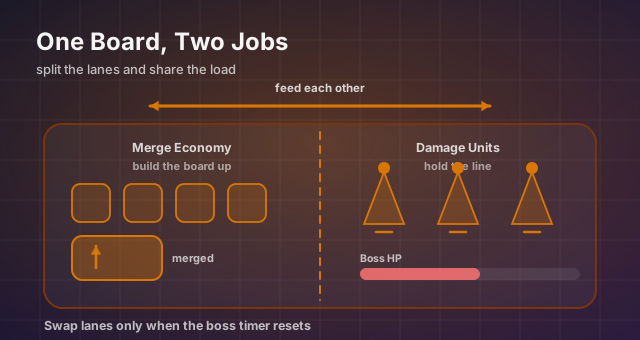
Co-op pairs you with a partner against a shared wave ladder. You keep your own mana, but you compete for tiles, and both of you face the same bosses. Runs end when the pair cannot clear a wave, so the practical ceiling is set by the weaker half of the partnership, not the average.
Most pairs that finish deep split roles immediately: one player builds economy and board control while the other converts that space into damage. Two players both spamming attackers is the classic collapse - the board fills, neither has mana left to upgrade, and the wave timer finishes the job.
Clan wars: PvP with a schedule
Clan wars take league-style PvP and add a timing layer. Your clan is matched against another clan, each member gets a limited number of attempts, and results are scored collectively. The individual games feel like league games; the difference is that entries are scarce, so a careless attempt costs the whole group.
In practice: enter with a deck you already tested in leagues, spend attempts during a window when you can actually focus, and use clan chat so two people do not cover the same target. Because rewards scale with clan performance, an active clan is one of the highest-value things a mid-game account can join.
Daily challenges and rotating events
Dailies are small, repeatable tasks - play a number of matches, win with a certain unit type, open a chest - that feed gold, keys and season pass progress. Their value is consistency more than size. Skipping them for a week costs more than dropping a handful of ladder games.
Rotating events change their ruleset on a timer: modified mana curves, restricted card pools, special wave sets. They supply most of the game's variety and often pay better per minute than the ladder when the modifier flatters your cards. When it fights your deck, they are a time sink with a shiny banner.
A useful habit is to read the modifier before you queue, not after you lose twice. Thirty seconds of reading saves ten minutes.
Building a weekly routine
A sustainable week runs in a fixed order: dailies first, a short league session, co-op when a partner is around, clan war attempts inside the scheduled window, and events only when the modifier suits your cards. Everything past that mostly converts time into fatigue.
Adjust the order by what your account is short on. If you are stuck on card levels, weight gold and chest sources. If you are short on upgrade materials for one specific card, weight the mode that pays the currency feeding it.
- Clear dailies before touching the ladder, so ladder losses never block a daily.
- Cap league sessions at a few matches; stop after two consecutive losses.
- Spend every clan war attempt, but only in a window where you can concentrate.
- Skip an event whose modifier contradicts your deck, even if the banner looks generous.
- Open chests on a rhythm rather than hoarding them indefinitely - keys and slots both have limits.
Install and update the game only through Google Play, the App Store, or the official Rush Royale site. Packages offered outside those channels are not supported, and accounts that use them risk losing progress.
Final verdict
Every mode in Rush Royale is worth playing, but none of them is worth playing all day. The ladder measures your collection, co-op measures your coordination, clan wars measure your reliability, and the events measure how well you read a ruleset before committing. Pick the one that pays the currency you are short on this week.
Players who progress steadily are not the ones with the most matches logged. They are the ones who convert a predictable twenty minutes a day into gold, chests and pass progress, then stop before the queue starts matching them against decks they cannot yet beat.
Keep reading
Rush Royale Co-op: Roles, Pacing and How to Carry Without Carrying
Splitting economy and damage duties with a partner, syncing merge pace to boss timers, and the mistakes that sink two-player runs.
Rush Royale Leagues and Ranked Seasons: How Climbing and Resets Work
How league tiers and seasonal resets actually work, when to push rating and when to stop, and why your ceiling is usually a collection-depth problem.
Rush Royale Boss Waves: Timers, Mechanics and Survival Patterns
Why boss waves decide most runs, the preparation that beats them, and how to read the three boss archetypes before they land.