
Meta
Rush Royale Deck Archetype Tier List: Which Strategy Wins Right Now
Key takeaways
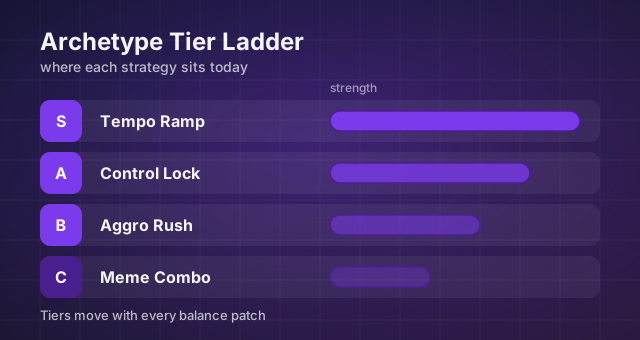
- Tiers describe how forgiving an archetype is at average skill, not how strong it is in perfect hands.
- Learn one archetype's losing matchups before swapping decks after every defeat.
- Economy-focused decks climb slowly but survive patches far better than burst decks do.
Unit rankings go stale the moment a balance patch lands, so this tier list ranks deck archetypes instead of individual cards. An archetype is the plan your five slots execute: how you make mana, how you spend it, and what kills the boss. Here is how the [current version] meta breaks down by archetype, who beats whom, and what you need before you spend gold on a build.
How to read an archetype tier list
A card is a tool; an archetype is the job. Patches change tools, not jobs, which is why archetype rankings outlive any single-unit list. You can keep one plan across several balance changes and simply swap a slot when numbers move.
Every archetype below is graded on mana production, how well that mana becomes board power, whether it answers boss waves, and how punishing a bad draw is. Weight goes to PvP league play, with co-op and clan wars as secondary checks.
S tier: the two archetypes that define the meta
These are the shapes you meet at the top of the ladder, and they win without needing a perfect draw - the real test of a strong archetype.
Ramp / economy engine
Ramp buys future mana instead of present damage. You place mana support units early, keep tiles free so duplicates can merge, and accept a weak opening in exchange for a mid-game where your units out-rank the opponent's. It beats control decks because a slow does nothing to a board that is not attacking yet.
Its weakness is the opening: pressure before the economy pays off and you lose holding support units. Carry one cheap splash-damage unit you can spam for merges while the engine comes online.
Control and slow
Control decides when the fight happens. Slows and debuffs stretch every wave, so your damage units get more value and enemy pushes dissolve before landing. It beats burst, because burst needs a clean window and control keeps deleting that window.
It struggles against ramp, since slowing an opponent with nothing on board wastes the effect. Pair it with one dependable single-target dealer, or you will stall out waves you cannot finish.
A tier: strong, but matchup dependent
Burst combo
Burst banks mana, then dumps it inside one short window to spike damage or delete a boss, and it preys on ramp decks during their weak early game. The cost is discipline: every early mana spent on defense is mana missing from the window, and burst players lose by panicking. Run one panic-button card and a rule for abandoning the window.
Hybrid flex
Hybrid carries two partial win conditions, usually a splash core with a single-target payoff, so no matchup is unwinnable. It is what most players climb with, because it survives bad draws and teaches economy, placement and boss handling at once. The trade-off is ceiling: rarely the best deck, never the worst.
B tier: playable, with conditions
Summon swarm
Swarm floods cheap units to bully early waves and shred anything that cannot handle many targets. Its flaw is board space: the flood that wins wave three blocks your own merges by wave ten, and it folds to any splash core. It works best in co-op, where a partner supplies the boss damage.
Single-target boss killer
Built around one high-rank dealer, this is excellent in daily events and co-op, where large health pools are the whole puzzle. In PvP it is fragile: without trash-wave clear you never reach the boss with a board intact. Always pair it with splash and mana support, never with a second payoff card.
C tier: fun, but it costs trophies
All-in aggro
Maximum pressure, no economy. You either break the opponent before your mana runs out or lose at the first boss with an empty bar. Fine for farming low leagues quickly, bad for learning, because it teaches nothing about pacing.
Chaos draft
Upgrading whatever drops and hoping the draw cooperates is not a plan. It holds up until league thresholds, where real economies out-merge you every wave. If this is you, pick one archetype today and spend everything into it.
Archetype comparison table
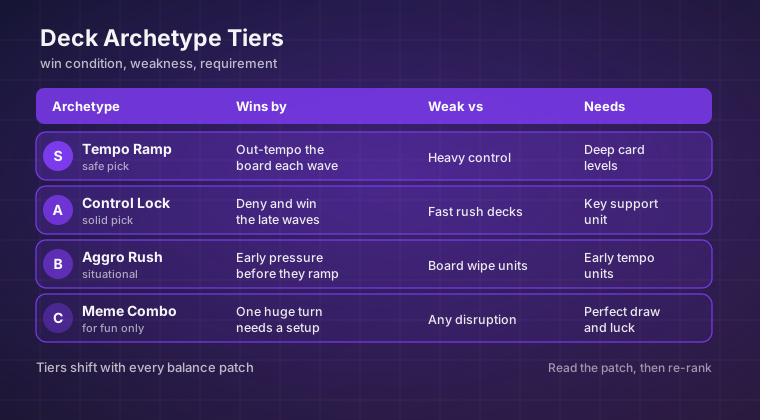
| Archetype | Tier | Win condition | Best against | What you need |
|---|---|---|---|---|
| Ramp / economy | S | Out-merge and win late waves on unit rank | Control decks that cannot punish a weak opening | Two mana support units, patience, free tiles |
| Control and slow | S | Stretch waves so damage units get more value | Burst, which needs an uncontested window | Reliable slow plus one single-target dealer |
| Burst combo | A | Bank mana, spike damage in one window | Ramp decks during their early game | Discipline, a panic card, an exit rule |
| Hybrid flex | A | Two partial win conditions, no bad matchup | Unknown opponents, mid-league ladders | Balanced curve, one retuned flex slot |
| Summon swarm | B | Overwhelm by unit count before splash lands | Single-target decks, co-op add waves | Cheap spam unit, board discipline, a partner |
| Boss killer | B | Delete high-health bosses before they arrive | Events and co-op boss-centric fights | One high-rank dealer, splash, mana economy |
| All-in aggro | C | Break the enemy board before mana runs dry | Slow starters in low leagues | Very cheap curve, low boss ceiling |
| Chaos draft | C | Hope the draw order cooperates | Nothing consistently | A decision: commit to one archetype |
Matchup shortcuts
- Ramp beats control: a slow does nothing to a board that is not attacking.
- Control beats burst: remove the window and banked mana is wasted.
- Burst beats ramp: punish the weak board before the economy pays off.
- Hybrid beats nothing decisively and loses to nothing badly - expect long games.
- Splash cores beat swarm; single-target cores beat bosses; every deck needs economy.
- If you cannot name your win condition before the match, you are on chaos draft.
When to ignore the tier list
Three things override the rankings. Collection depth: an archetype whose core cards you lack is not an option. League bracket: aggro and swarm overperform below their tier in lower brackets, where nobody punishes a weak economy. Modifiers: daily events change wave composition or mana rules, which promotes every splash core here.
Clan wars differ: you face a known roster and can scout it, so a narrow counter build usually beats a higher-tier generalist.
Safety note: install and update only through Google Play, the App Store, or the official site. Unofficial installers break the terms of service, risk a permanent ban, and are a common way to get malware on a phone. Every archetype here is reachable through normal play.
Final verdict
Pick one S-tier archetype as your main and spend into it until its core cards are comfortable - spreading upgrades across three archetypes is the most common reason players stall at a league threshold. Keep an A-tier hybrid for matchups your main dislikes.
Re-check this after major patches, but expect slow movement: archetype tiers shift when mechanics change, not when numbers do.
Keep reading
Rush Royale Matchups: How to Beat the Three Decks You Keep Losing To
Reading an opponent's archetype in the first wave, finding your counter window, and knowing which single slot to change between games.
Rush Royale Clan Wars Explained: Roles, Scoring and Weekly Routines
How clan war scoring actually rewards participation, which roles matter in a war, and the weekly routine that keeps a clan competitive without burning anyone out.
Rush Royale Off-Meta Decks That Still Win Ranked
Why unfamiliar decks beat stronger ones on the ladder, how to pick an off-meta direction, and the collection depth it actually needs.