
Units
Rush Royale Support and Utility Units: Buffs, Slows and Mana Generation
Key takeaways
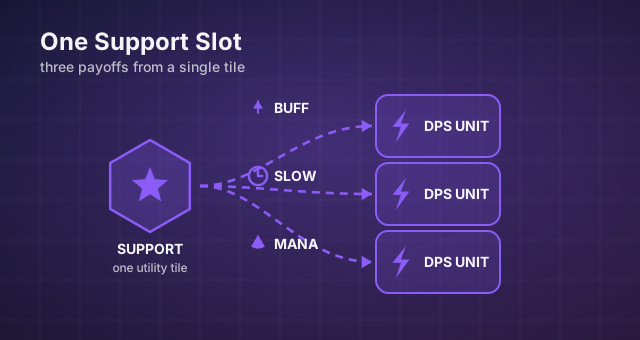
- Support multiplies the units you already have instead of adding another one to feed.
- Slows and debuffs are how you buy the seconds a late merge needs.
- Cut the utility slot only when your damage core is already fully levelled.
Support units do not appear on the damage meter, which is exactly why beginners keep cutting them. In Rush Royale the utility slot is what turns a pile of offensive cards into a functioning economy, buying both time and mana at a discount no damage card can match. This guide covers the three utility families - amplification, control and mana generation - and gives you honest criteria for when the support slot should go.
Why the fifth slot belongs to support
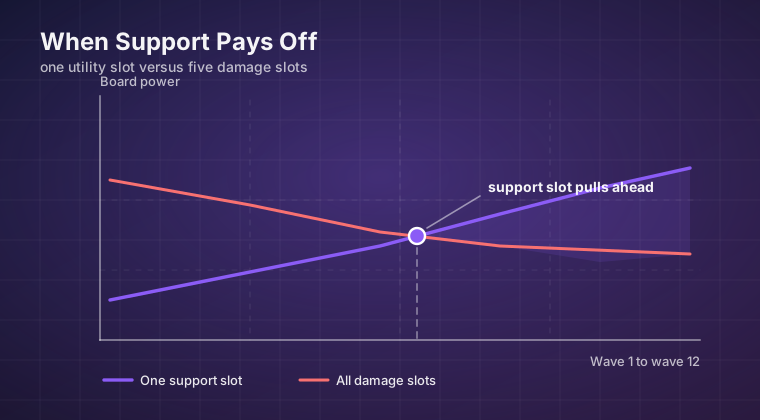
A five-card deck has room for roughly four offensive ideas, and those four compete for the same mana pool. Support changes the size of the pool rather than fighting over it, so its contribution scales with everything else you are doing.
There is also a survivability argument. Most losses are not "not enough damage," they are "not enough time" - the wave arrived faster than your board developed. Anything that slows enemies or accelerates your own build converts directly into the seconds that missing damage needed.
Finally, support is the cheapest way to make low-level cards competitive. While chests, keys and the season pass slowly raise your card levels, buffs and economy let a modest collection punch above its upgrade tier.
| Support type | What it gives you | What it costs | Pairs best with |
|---|---|---|---|
| Offensive buff | Higher effective damage per tile already owned | A tile that deals no damage itself | One high-rank single-target dealer |
| Slow / debuff | Time: enemies spend longer inside your damage zone | No direct contribution to wave clear | Splash units and long lanes |
| Mana generation | A larger budget for every subsequent decision | Early tempo while the engine ramps | Expensive or merge-hungry cores |
| Cleanse / protection | Removes stacks and crowd control before they snowball | Situational; dead card in clean matchups | Co-op and control-heavy metas |
Offensive buffs multiply what you already have
Buffs are the purest example of leverage: one tile raising the output of three others routinely beats adding a fourth mediocre attacker. They favour concentrated boards, so they grow stronger as your main dealer climbs through merging.
The trap is stacking identical effects. Duplicated buffs frequently return diminishing results, so one offensive amplifier plus one different effect almost always beats two copies of the same idea. Read in-game descriptions rather than assuming linearity.
Placement also decides everything here. A unit that strengthens neighbours needs neighbours, not a corner; a buff sitting two tiles away from your dealer is a wasted slot.
Slows and debuffs buy the missing seconds
A slow / debuff unit is the best defensive tool available early. Enemies held inside your damage zone longer absorb more attacks from the same board, which is functionally identical to raising everyone's damage without spending anything.
Control also stabilises boss fights. A slowed boss spends longer walking into range and less time applying pressure, giving you a wider margin on the wave timer and more time to finish an emergency merge.
Mana generation is the real engine
Every decision in a match is denominated in mana, so anything that raises income is compounding rather than additive. A unit that pays back its cost and keeps producing is the single highest-leverage card a beginner can add.
The cost is tempo. Economy units need setup time, so the opening waves are weaker than they would be with another attacker - acceptable when the waves are gentle, dangerous against aggressive openings in PvP.
- Bank your economy units before the first boss so the investment pays off during the health-pool check.
- Rank them up rather than spreading; one strong engine beats three weak ones.
- Never merge away your last income source unless the run is effectively over.
- If your board is still starved at mid waves, the problem is too little economy, not too little damage.
When to cut the support slot
Support is not free, and there are honest situations where replacing it with damage is correct. Learn to recognise them instead of treating the slot as permanent.
Cut it when the fight is too short for setup to pay off. Some daily events and aggressive rush matchups end before an engine returns its cost, so a unit that needs twenty safe seconds is mathematically worse than raw damage.
Cut it when the support effect is redundant with the encounter. Cleanse effects do nothing against lineups applying no debuffs, and a buff is wasted if your damage dealer died in wave one. A card answering a question nobody asked should be swapped.
Cut it when you already own tempo and need a closer. If your board comfortably reaches mid waves and you lose only to boss timers, converting the utility slot into a burst damage unit is the correct adjustment.
Do not cut it out of frustration or because a tier list ranked it low. Check the symptom first: empty mana means more economy, leaking packs means control or splash, and only "bosses surviving with resources left over" genuinely justifies a pure damage swap.
Testing whether support is earning its slot
Run [N] matches with the support card, then [N] with your best alternative in that slot, and compare clear depth rather than win rate. Win rate is noisy because opponents vary; depth isolates how much board your deck actually built.
If the difference is small, keep the support card anyway while learning. It teaches better habits around mana discipline and positioning, and those habits carry over to whatever card eventually replaces it.
Final verdict
Support and utility units are the cheapest power available to a new player because they scale the whole board instead of competing for its limited resources. One amplifier, one control effect and one mana source turn four ordinary attackers into a deck that reaches mid waves with options.
Treat the slot as flexible rather than sacred. When a matchup is too short for setup, or the effect answers nothing the opponent actually does, replace it with damage - but replace it with a reason, written down, rather than a feeling after one bad loss.
Keep reading
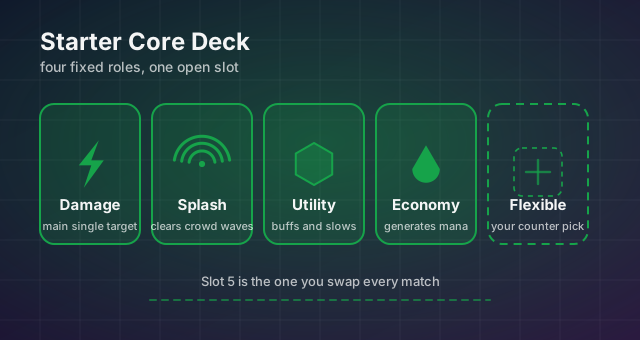
Best Rush Royale Units for Beginners: A Starter Core That Scales
How to choose the five cards worth levelling when your collection is thin: slot roles, screening criteria and why copying a ladder deck early backfires.
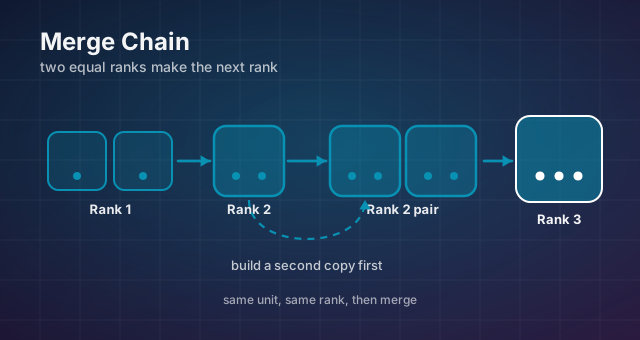
Rush Royale Merge Mechanics: Every Rule Behind Ranking Up Units
Rank thresholds, why empty board tiles are a resource, when to merge and when to hold, and the misplays that quietly cost you a run.
Rush Royale Damage Types Explained: Splash, Single-Target and Burst
The three damage profiles in Rush Royale, what each one answers, and why a single-target-only deck gets overrun by dense waves.