
Guides
Rush Royale Daily Routine: A 20-Minute Loop That Compounds
Key takeaways
- Collect rewards and clear quests before you queue, so playtime always double-dips.
- A fixed stop point prevents the loss-tilt sessions that undo a good day.
- Weekly and seasonal tasks are where the bulk of chest income actually sits.
Progress in Rush Royale is a compound interest problem: the players who pull ahead are rarely the ones who grind hardest in a single session, they are the ones who never miss the small daily sources of cards and currency. This guide gives you a twenty-minute loop you can repeat every day, plus the weekly and seasonal jobs that sit on top of it.
The twenty-minute loop
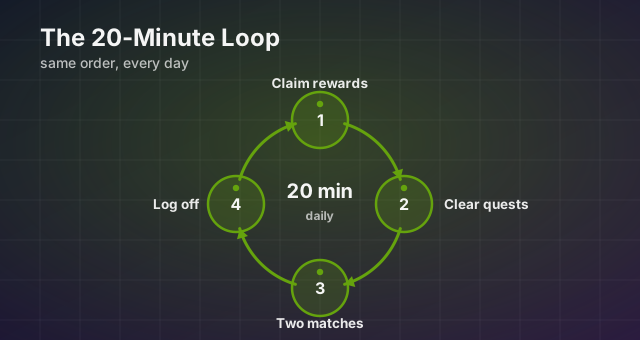
The loop is ordered deliberately: the game front-loads rewards into actions that take seconds and back-loads everything else into matches that take minutes. Do the cheap actions first, so a session you must abandon early still paid you something.
Start by collecting anything already waiting: quest rewards, event progress, season track claims, and chest timers. Then read the quest list before playing a single match, since quests are phrased in terms of modes or unit types, and playing them deliberately roughly halves the matches you need per day.
Open chests as soon as keys allow rather than stockpiling them. Chest contents are the main engine of card progression, and keys sitting at the cap are keys you stopped earning. The exception is an event that asks you to hold resources, so read the event text first.
Daily, weekly, and seasonal schedule
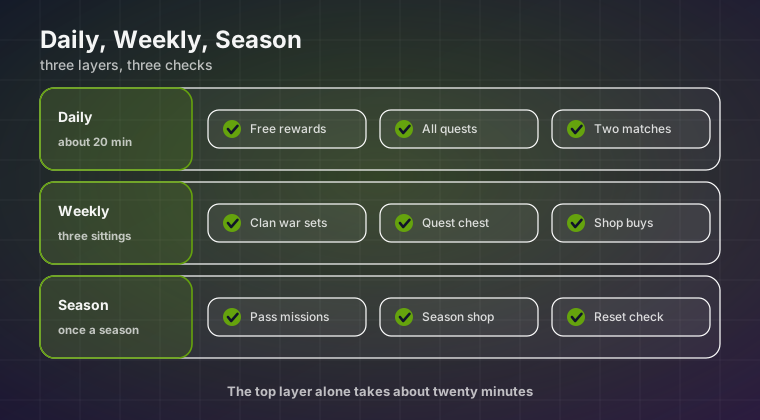
Think in three layers: the daily layer is maintenance, the weekly layer is where most of your rating gets won, and the seasonal layer is where you decide what your account is building toward.
| Layer | Tasks | Time budget | Why it matters |
|---|---|---|---|
| Daily | Claim quest and free rewards, spend keys on chests, play your quest matches, finish the event ticket if one is live | About 20 minutes | Compounding card and currency income; missing days is the main reason accounts stall |
| Weekly | Push league rating in one focused block, clear weekly quests, collect clan rewards, review one deck slot | About 2 to 3 hours total, spread over 2 to 3 days | Rating resets and weekly objectives carry the largest single payouts |
| Seasonal | Finish the season pass track, plan card upgrades, set one deck goal, clean out unused resources | A few short sessions across the season | Season rewards expire; unspent progress at reset is simply lost value |
| Event-based | Read the modifier, build one deck for it, farm only while the event is efficient | Variable | Events pay above normal rates but only during their window |
Keep the daily layer small: if twenty minutes becomes an hour, you will skip days, and skipping costs more than the extra matches earn.
Quests, chests, and keys in the right order
Run the daily in this sequence and it feels mechanical: claim, read, open, play, stop. Claim everything with a glowing indicator first, read the quest list second and pick the mode that satisfies the most objectives at once, open chests third, then play. Stop when the objectives are done, not when you feel like stopping.
- Claim first: rewards you forget to collect are rewards you never earned.
- Read quests before queueing: one deliberate session beats three accidental ones.
- Spend keys at least daily so the timer keeps regenerating.
- Leave the season track claim until after your matches, so progress from play is included.
- Log out on a completed objective, not on a loss.
Keys regenerate over time up to a cap, so the cost of a full cap is invisible: you lose the regeneration you would have had. Emptying them daily beats one big weekly burst.
Which modes to play on a short day
On a twenty-minute day, mode choice matters more than skill. Prioritise whatever the quest list names, then whatever an active event rewards, then co-op if you want low-stress repetitions of a deck you are learning, then PvP for rating.
Save rating pushes for days when you have a real block of time. Leagues reward streaks and punish tilt, and a rushed ranked session is the most common way players donate rating they spent a week earning. A short day is a maintenance day; a long day is a climbing day.
If an event modifier is live, read it before you queue. Modifiers change mana income, wave composition, or which unit types perform well, so a deck that is correct outside the event can be wrong inside it.
When to stop: the stop condition matters
Most players do not lose rating because they play badly, they lose it because they keep playing after the point where they stopped playing well. Set a stop condition in advance and treat it as a rule.
The cleanest version is a loss limit: two consecutive ranked losses ends the ranked block, and you switch to co-op, to event farming, or you close the game. This is fatigue management, not superstition - timed decisions degrade quickly, and the third game after two losses is played worse than the first.
The second condition is resource-based. Once objectives are done and keys are spent, the value of another match is tiny next to the value of being fresh tomorrow. A loop you abandon after four days returns nothing.
Weekly and seasonal checklist
Once a week, spend ten minutes outside matches. Check clan contribution and collect clan rewards, look at whether any weekly objective is about to expire, and ask which slot keeps losing you matches - a card problem or a play problem? Change at most one slot per week.
Once per season, do the bigger audit: confirm your five core cards and that gold goes into them rather than spreading thin, then check whether the remaining days are enough to finish the season pass. If not, redirect the time and note which events paid well for next season.
The loop only works if it is boring enough to repeat. Twenty calm minutes a day for a season beats a few long weekends, because the economy rewards consistency over intensity.
Final verdict
Build the routine around claim-first, quest-aware play, daily key spending, and a hard stop condition. Those four habits capture nearly all the recurring value the game offers.
Then treat weekly rating blocks and seasonal audits as layers on top. Players who do the daily layer reliably still progress steadily; players who skip it and grind weekends instead always end up short of cards, currency, and patience.
Keep reading
Rush Royale for Beginners: A Practical First 7 Days Roadmap
The three decisions that decide whether a new Rush Royale account snowballs: what you merge, what you spend, and which modes you queue.
Rush Royale Deck Building: How to Build Five-Slot Decks That Win
Slot roles, merge maths and three archetypes that hold up in ranked — plus how to tune a single slot instead of rebuilding everything after a loss.
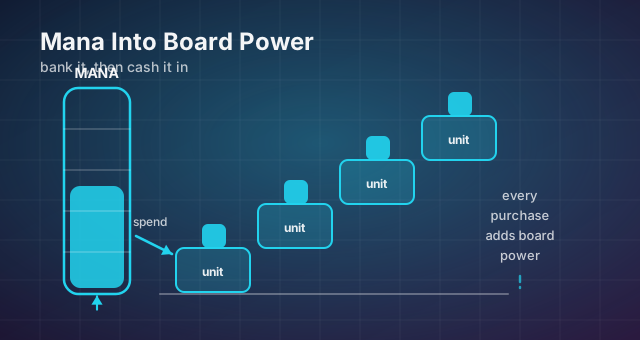
Rush Royale Mana Economy: How to Convert Mana Into Board Power
The spending curve that separates players who scale past the first boss from players who stall with a full board of rank-one units.